
The Dunblane Massacre: Police Failures and Unanswered Questions
Thomas Hamilton, the Cullen Inquiry, QVS, missing evidence and the 100-year files
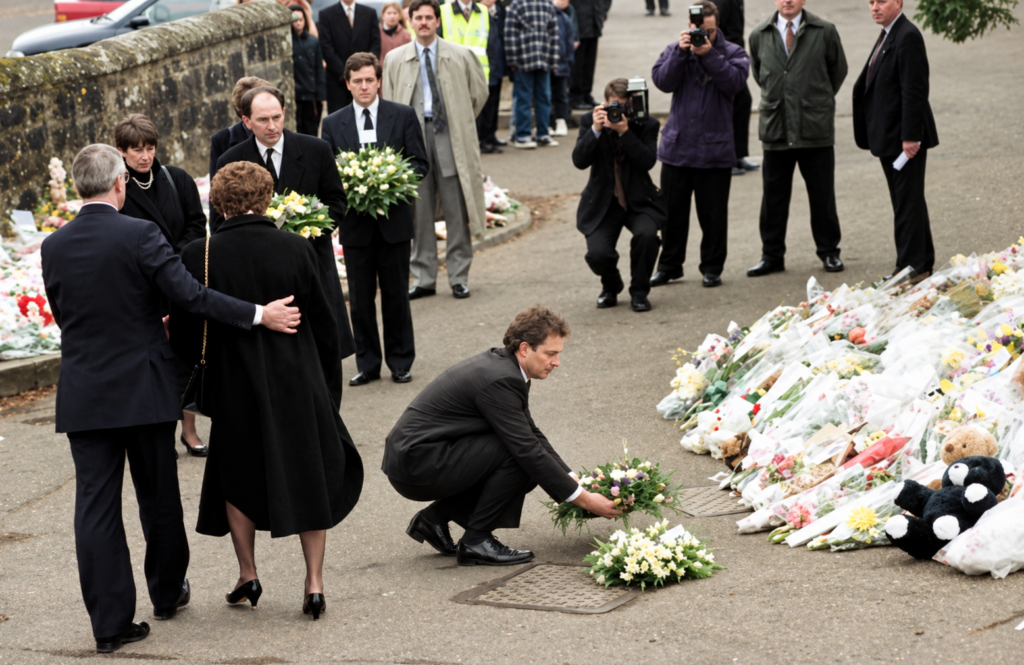
On 13 March 1996 Thomas Hamilton entered Dunblane Primary School and killed sixteen children and their teacher, Gwen Mayor, before taking his own life. The Cullen Inquiry followed, as did legislation that effectively ended private handgun ownership in Great Britain.
The familiar explanation is straightforward: Hamilton was allowed to keep firearms that should have been taken from him. Yet the failure of the licensing system was only one part of a much longer sequence of institutional failures.
For years, police, prosecutors, education authorities and youth organisations had encountered concerns about his conduct. Warnings were written, charges considered and a search proposed. Crucial information failed to reach the files on which later decisions depended, and the questions did not end with the shooting.
Our purpose here is to map the record, not yet declare a verdict. We have retained 43 distinct findings and investigative leads from the Cullen Report, parliamentary proceedings, information-commissioner decisions, archive catalogues, the Scottish Child Abuse Inquiry and contemporary reporting.
Dunblane Massacre Anomalies and Unanswered Questions
Our investigation has uncovered:
- 16 early warnings
- 9 child-access and network questions
- 10 preparation and evidence issues
- 4 archive questions
- 4 political and social leads.
Dunblane Before the Massacre: The Warnings Around Thomas Hamilton
The warnings were neither rare nor subtle. The question is why they so often failed to shape the next decision.
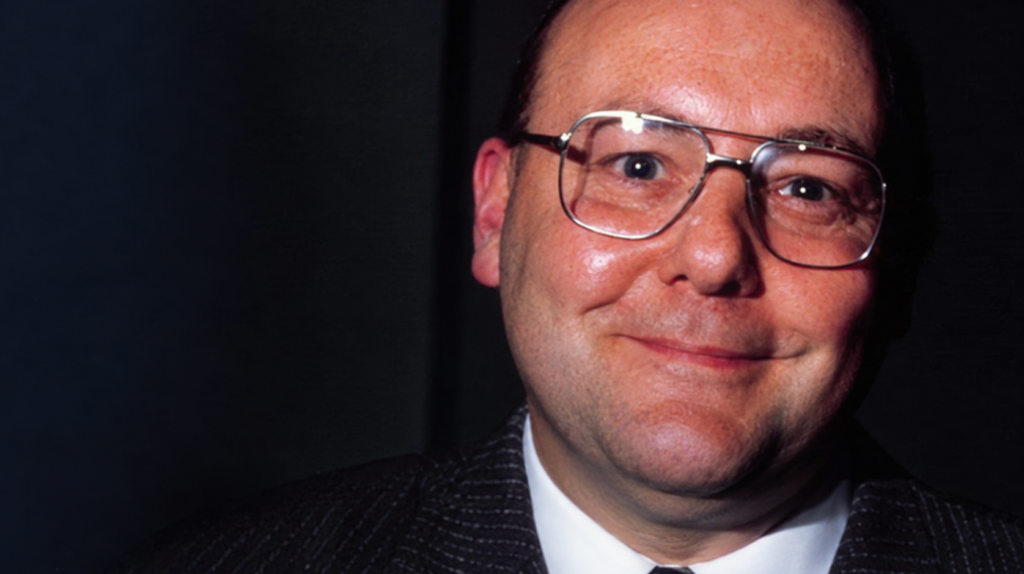
1. The Scout warning – Documented. The Scout Association withdrew Hamilton’s warrant in 1974 after concerns about his suitability to lead boys. He spent years contesting the decision and presenting his departure in a more favourable light. [1]
2. A national warning reached education – Documented. By 1981, an education official had received a memorandum referring to a confidential Scout report that judged Hamilton unsuitable for Scout work. Yet he continued to seek and sometimes obtain, school premises for his own boys’ clubs. [1]
3. The council quietly shut doors – Documented. Following complaints about a 1988 camp, the regional council became so wary of Hamilton that it sometimes avoided granting him premises by allocating the requested facilities to other community users. [1]
4. The first firearms memo vanished – Documented. After Hamilton displayed firearms to a family and allowed boys to handle them, Inspector Nimmo wrote a memorandum. Cullen found it should have been recorded in the firearms file and criminal intelligence. Neither happened. [1]
5. The 1991 child-protection investigation – Documented. Complaints from Hamilton’s 1991 Mullarochy Bay camp – involving assaults, filming and his treatment of young boys – brought Detective Sergeant Paul Hughes of the Child Protection Unit into the investigation. [1]
6. The missing slide boxes – Documented / Unresolved. Police knew more photographic slides had been processed than Hamilton surrendered. Two boxes, thought to contain roughly 72 slides, were never recovered. Cullen could not say whether they held more disturbing material. [1]
7. Ten draft charges, no prosecution – Documented. Hughes’s report to the Procurator Fiscal included ten proposed charges. None was prosecuted. The papers were eventually marked “no pro: no crime libelled: not in the public interest”. [1]
8. Hughes warned about the guns – Documented. In a separate firearms warning, Hughes described Hamilton as having an “extremely unhealthy interest in young boys” and urged serious consideration of revoking his certificate. [1]
9. McMurdo: “no action” – Documented. Deputy Chief Constable Douglas McMurdo marked Hughes’s memorandum “no action” on 11 November 1991. He left no contemporaneous explanation for the decision. [1]
10. The key memo never entered the system – Documented. The Hughes warning was not entered in Hamilton’s firearms file or criminal intelligence. Later officers reviewing his suitability therefore lacked one of the clearest adverse assessments ever made of him. [1]
11. The 1992 renewal without the warning – Documented. When Hamilton’s certificate came up for renewal in 1992, the acting decision-maker had not seen Hughes’s memorandum. Cullen found that no effective fresh assessment of Hamilton’s suitability took place. [1]
12. The 1993 search-warrant request – Documented. Fresh complaints prompted police in 1993 to seek a warrant to search Hamilton’s home for photographs, equipment and documents. The Procurator Fiscal did not authorise the search because the evidence was considered insufficient to establish criminal conduct. [1]
13. A third adverse memo disappeared – Documented. DC Gordon Taylor’s 1993 memorandum expressed concern that Hamilton had engaged in criminal conduct. It, too, failed to reach the firearms file or criminal-intelligence records. [1]
14. The 1995 officer’s unease – Documented. PC Anne Anderson felt uneasy during Hamilton’s 1995 firearms-renewal visit. The earlier adverse reports were absent from the intelligence checks she made, leaving little recorded evidence to support her misgivings. [1]
15. The doubtful “good reason” – Documented. Cullen questioned the justification for Hamilton possessing handguns in duplicate calibres. His supposed competition activity was not borne out by substantial evidence of participation. [1]
16. The sudden rearmament – Documented. After nearly eight years with no ammunition purchases recorded on his certificate, Hamilton bought 1,700 rounds of 9 mm ammunition, 500 rounds of .357 ammunition and two further handguns between September 1995 and February 1996. [1]
Thomas Hamilton, Children, Photographs and the Queen Victoria School Connection
The second cluster concerns Hamilton’s access to boys, the scale of his photographic material, and later claims of a wider network.
17. The enormous photographic archive – Documented. The search of Hamilton’s home yielded 4,260 negatives, 542 photographs, 445 slides and 37 videotapes. Much of the still material showed boys bare-chested – an archive of a scale rarely conveyed in short accounts of the case. [1]
18. Roughly 80 hours of videotape – Documented. The inquiry reviewed extracts from about 80 hours of videotape. Contemporary observers described footage of boys in swimming trunks performing exercises, with the camera sometimes lingering on individual children. [14]
19. The garden fire – Contemporary Witness Evidence. A neighbour told the inquiry of a large garden fire in which Hamilton appeared to burn plastic boxes that might have contained tapes. The contents were never established; the account is evidence of a suspicious-looking fire, not proof that recordings were destroyed. [14]
20. A wider network of boys’ clubs – Documented. Hamilton operated boys’ clubs across central Scotland, moving between communities and repeatedly seeking premises despite complaints. His access to children extended well beyond one Dunblane club. [1] [15]
21. The QVS abuse findings – Documented Later Finding. In 2024, the Scottish Child Abuse Inquiry found that pupils at Queen Victoria School in Dunblane had suffered serious physical, sexual and emotional abuse over many years. The finding is independent of the Hamilton allegations. [4]
22. “Friends of QVS” was real – Documented Later Finding. A former pupil confirmed that a group known as “Friends of QVS” existed and recalled adults taking boys out when their families could not attend school occasions. The inquiry found no basis for concluding those outings were abusive, nor evidence that the group had formal status. [5]
23. What the QVS inquiry actually found – Documented Later Finding. The same inquiry examined suspicions about Hamilton. Records showed he was considered as a possible .22 rifle coach in 1980, but was told he was not needed. The inquiry found no evidence that he was involved with QVS pupils. [5]
24. The paedophile-ring claim reached Parliament – Contemporary Allegation. On 19 April 1996, an MP told the House of Commons that Hamilton had been linked to a paedophile ring, while noting he had never been convicted of paedophilia. [6]
25. The allegation was in the press within days – Contemporary Reporting. On 17 March 1996, UPI reported that British newspapers were suggesting a possible link to an international paedophile ring. The reporting appeared within days of the massacre, long before later online theories. [7]
The Dunblane Massacre: Preparation, Crime-Scene and Evidence Anomalies
The day of the massacre introduces a different kind of problem: preparation that is well documented, alongside later questions about calls, weapons, evidence handling and the rapid destruction of the scene.
26. Questions about the school layout – Documented. A nine-year-old boy told the inquiry that Hamilton had repeatedly asked him about the school’s corridors, gym, assembly arrangements and fire exits. The questions, he said, had continued for some time. [1]
27. Questions about armed-police response – Documented. Days before the attack, Hamilton discussed police firearms response and the availability of armed officers with retired policeman J. S. B. Wilson. Wilson did not think at the time that Hamilton was seeking operational intelligence. [1]
28. The cut telephone cable – Documented. Hamilton bought pliers in January 1996 and used them to cut telephone wiring beside the school on 13 March. The cables served neighbouring houses, not the school – leaving an odd preparatory act, but not a disabled school phone system. [1]
29. Normal plans after the massacre date – Documented. Even while preparing for the attack, Hamilton appeared to be arranging future club activities, including a summer course and transport. These outward plans sit uneasily beside the evidence of advance reconnaissance, though they do not disprove premeditation. [1]
30. Was the headmaster’s call 999? – Documented Discrepancy. Witness accounts differed on whether headmaster Ronald Taylor contacted police through the ordinary number or via 999. A later freedom-of-information request sought the recording to settle the discrepancy. [2]
31. The missing emergency-call recording – Documented Evidence Loss. Police confirmed that Taylor’s call had been recorded and registered as an evidential production. By 2006, however, searches could find neither the tape nor a transcript. [2]
32. Who moved the fourth handgun? – Documented / Unresolved. Accounts of the fourth handgun’s movement were unclear. In 2006, the Scottish Information Commissioner found that two constables’ statements referred to an officer removing it and ordered that officer’s name disclosed. [2]
33. Who identified the ammunition case? – Documented / Unresolved. A forensic scientist identified a large ammunition case as Hamilton’s on the strength of information supplied by a police officer. The Commissioner later ordered disclosure of the officer’s identity. [2]
34. The grey saloon car – Documented / Unresolved. A witness reported a grey saloon car on the morning of the massacre. Police said they had traced the driver and re-interviewed the witness, but a 2006 FOI decision found their response to a request for the underlying tracing documents procedurally inadequate; it did not establish that the car was suspicious. [3]
35. The gym was demolished within a month – Documented. The school gym was demolished on 11 April 1996, before the public inquiry began on 29 May. The decision was understandable in light of the trauma, but it also removed the physical scene before the inquiry heard evidence. [12] [13]
The Dunblane Files: 100-Year Secrecy, Missing Evidence and Archive Questions
The records did not simply become public after Cullen. Their closure history became a controversy of its own – and the surviving archive is far more complicated than the phrase “sealed for 100 years” suggests.
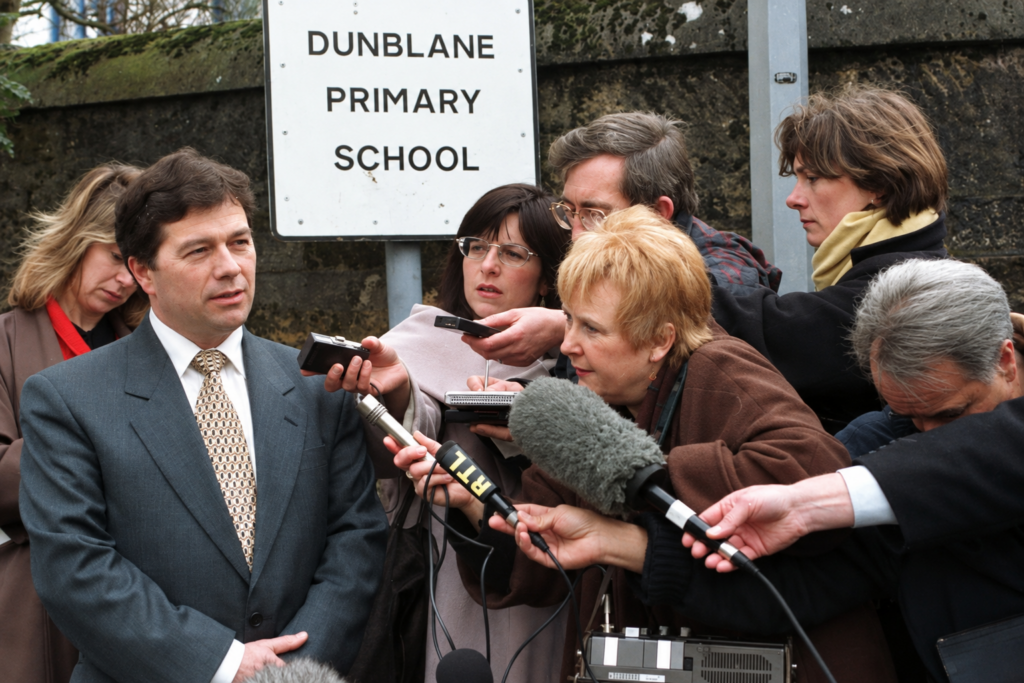
36. The 100-year closure of original productions – Documented. National Records of Scotland lists the original inquiry productions as subject to a 100-year closure, while redacted copies of most are available. Other parts of the inquiry archive have different access arrangements. [8]
37. No automatic statutory “100-year rule” – Documented Parliamentary Controversy. The century-long restrictions became contentious because they were administrative closure decisions, not the automatic consequence of a special Dunblane secrecy law. Scottish parliamentary proceedings questioned their basis. [9]
38. Files unrelated to children were also questioned – Documented Parliamentary Concern. MSPs also questioned why long closures covered material that appeared not to identify children. The controversy was therefore about the scope of restrictions, not simply whether victims deserved privacy. [9]
39. A six-metre archive with uneven access – Documented Archive Structure. The NRS catalogue describes an extensive inquiry collection, including transcripts, submissions, productions and working papers. Some records are open and others restricted. The task is to identify which decisions affected which documents – not to repeat the inaccurate claim that everything was sealed. [8]
Police, Politics, Freemasonry and the Wider Thomas Hamilton Network
The final cluster is the most easily sensationalised. The safest approach is to separate what Parliament actually recorded from what later conspiracy literature added to it.
40. The Freemasonry allegation – and rebuttal – Documented Parliamentary Allegation And Rebuttal. In December 1996, Lord Burton, then Grand Master Mason of Scotland, told the House of Lords that Grand Lodge searches had found no record of Hamilton or McMurdo as members. That is an important rebuttal to claims that their Masonic membership was established. [10]
41. Lord Burton’s cover-up allegation – Documented Parliamentary Allegation. In the same parliamentary debate, Burton raised reports of meetings between Hamilton and McMurdo and referred to rumours of political pressure and blackmail. He did not substantiate them. Their significance is that such suspicions were being voiced in Parliament in 1996. [10]
42. Tam Dalyell’s police-informer question – Documented Parliamentary Allegation And Official Denial. In March 1997, Tam Dalyell asked when ministers had learned Hamilton was a police informer. The Prime Minister replied that Cullen, four police forces and the Scottish Crime Squad had found no evidence of informer status. [11]
43. Hamilton’s posthumous media package – Documented. On the day of the killings, Hamilton posted envelopes containing his grievances to STV and other recipients. The material arrived the next day: a deliberate attempt to have his own account circulated after the massacre. [12]
The Bigger Picture: What the Dunblane Anomalies Reveal
The strongest pattern to be found is not a cinematic theory of a fake massacre or a secret second gunman. It is a documented sequence in which warnings about the same man repeatedly failed to accumulate where they mattered; child-access concerns persisted for years; known photographic material went missing; an extraordinary visual archive was later recovered; contemporary network allegations were reported almost immediately after the killings; evidence-management questions emerged later; and parts of the archive received unusually long closure periods.
The conservative question is already serious enough: was Dunblane merely a chain of independent mistakes, or did institutional fragmentation, personal relationships, reputational protection and post-event containment combine to produce a story more complicated than the public shorthand of “a lone gun man who slipped through the net”.
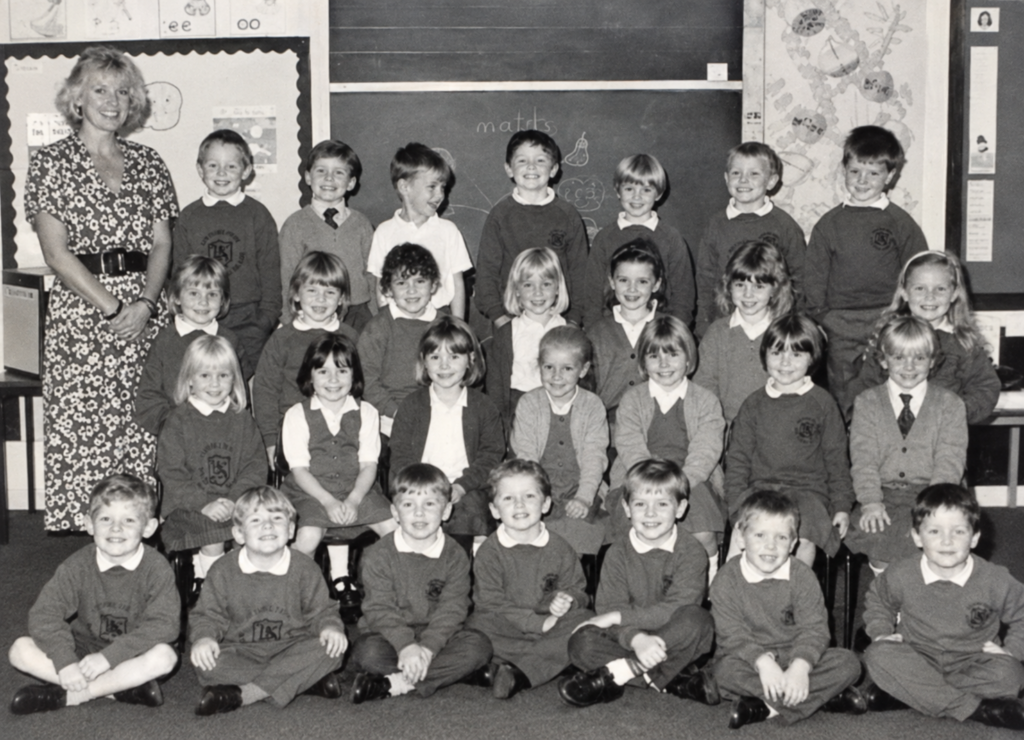
Dunblane Sources and Primary Records:
[1] The Cullen Report – Public inquiry into the shootings at Dunblane Primary School, 16 October 1996
https://www.gov.uk/government/publications/public-inquiry-into-the-shootings-at-dunblane-primary-school
[2] Scottish Information Commissioner, Decision 055/2006 – Taylor call, fourth handgun and ammunition case
https://www.foi.scot/decision-0552006
[3] Scottish Information Commissioner, Decision 136/2006 – grey saloon car witness and police follow-up
https://www.foi.scot/decision-1362006
[4] Scottish Child Abuse Inquiry, Queen Victoria School findings, 22 October 2024
https://www.childabuseinquiry.scot/evidence/case-study-no-9-volume-4
[5] Scottish Child Abuse Inquiry, Queen Victoria School findings – Friends of QVS and Hamilton/QVS findings
https://www.childabuseinquiry.scot/sites/default/files/2024-10/Case%20Study%20Findings%20-%20Queen%20Victoria%20School_1.pdf
[6] House of Commons Hansard, 19 April 1996 – contemporary statement that Hamilton had been linked to a paedophile ring
https://publications.parliament.uk/pa/cm199596/cmhansrd/vo960419/debtext/60419-09.htm
[7] UPI Archives, 17 March 1996 – contemporary reporting of alleged international paedophile-ring link
https://www.upi.com/Archives/1996/03/17/Queen-pays-tribute-to-Dunblane/2921827038800/
[8] National Records of Scotland, COM21 – Dunblane Public Inquiry catalogue
https://catalogue.nrscotland.gov.uk/nrsonlinecatalogue/details.aspx?df=&di=y&dt=&k=dunblane+primary&ko=a&r=&reference=COM21&ro=s&st=1&tc=y&tl=n&tn=n&tp=n
[9] Scottish Parliament, Public Petitions Committee, 29 October 2003 – Cullen Inquiry 100-year closure order
https://www.parliament.scot/chamber-and-committees/official-report/search-what-was-said-in-parliament/PE-29-10-2003?iob=15018&meeting=3034
[10] House of Lords Hansard, 16 December 1996 – Lord Burton on Freemasonry, alleged meetings, pressure and cover-up
https://api.parliament.uk/historic-hansard/lords/1996/dec/16/firearms-amendment-bill-1
[11] House of Commons Hansard, 19 March 1997 – Tam Dalyell police-informer question and official reply
https://hansard.parliament.uk/commons/1997-03-19/debates/90fcdd84-e615-4293-8d48-25f97e261699/ThomasHamilton
[12] STV News archive – timeline and Hamilton’s posthumous media package
https://archive.news.stv.tv/archive/1345003-dunblane-massacre-timeline-of-school-shooting-that-shocked-a-nation.html
[13] The Independent, 12 April 1996 – Dunblane school gym reduced to rubble
https://www.independent.co.uk/news/dunblane-school-gym-reduced-to-rubble-1304404.html
[14] The Independent, 8 June 1996 – Hamilton tapes shown at inquiry; witness evidence about garden fire
https://www.independent.co.uk/news/hamilton-tapes-show-boys-in-gym-poses-1335936.html
[15] The Independent, 16 March 1996 – Hamilton’s network of boys’ clubs across central Scotland
https://www.independent.co.uk/news/hamilton-s-evil-network-1342192.html
By Raging Dissident & Éire & Albion